Full Stack Isn't Enough Any more. You Need to Be Full Team.
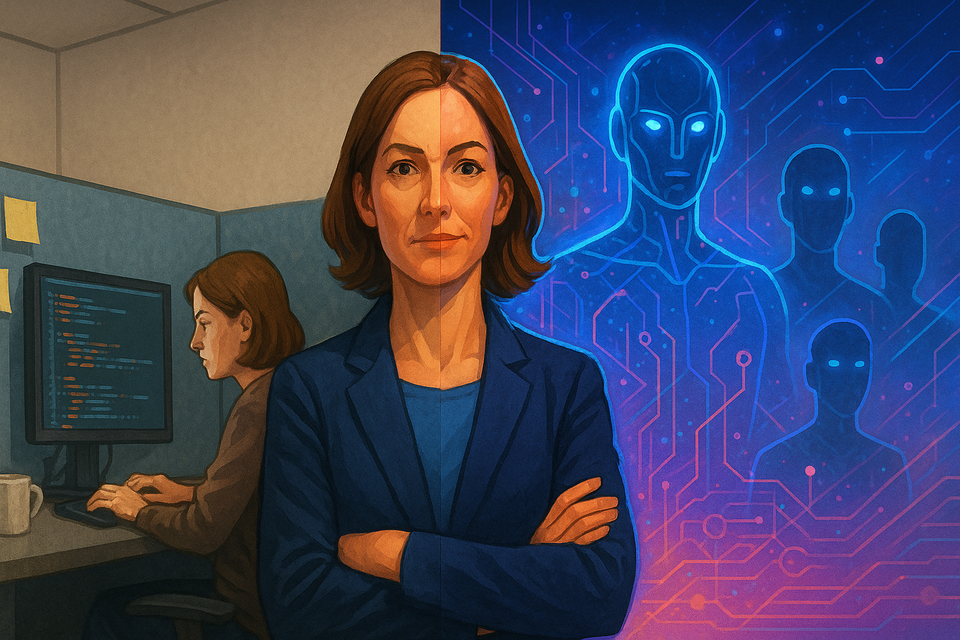
When the JCB excavator arrived on construction sites in 1945, workers faced a choice: adapt or keep shoveling. Those who learned to operate the machines moved 50x more dirt. The others? ...
Welcome to software development's latest excavator moment.
Selling the shovel
Its not selling like it used to. By now, I expect you've seen the worrying stats around graduate unemployment (USA stats, but I expect its like this everywhere)?
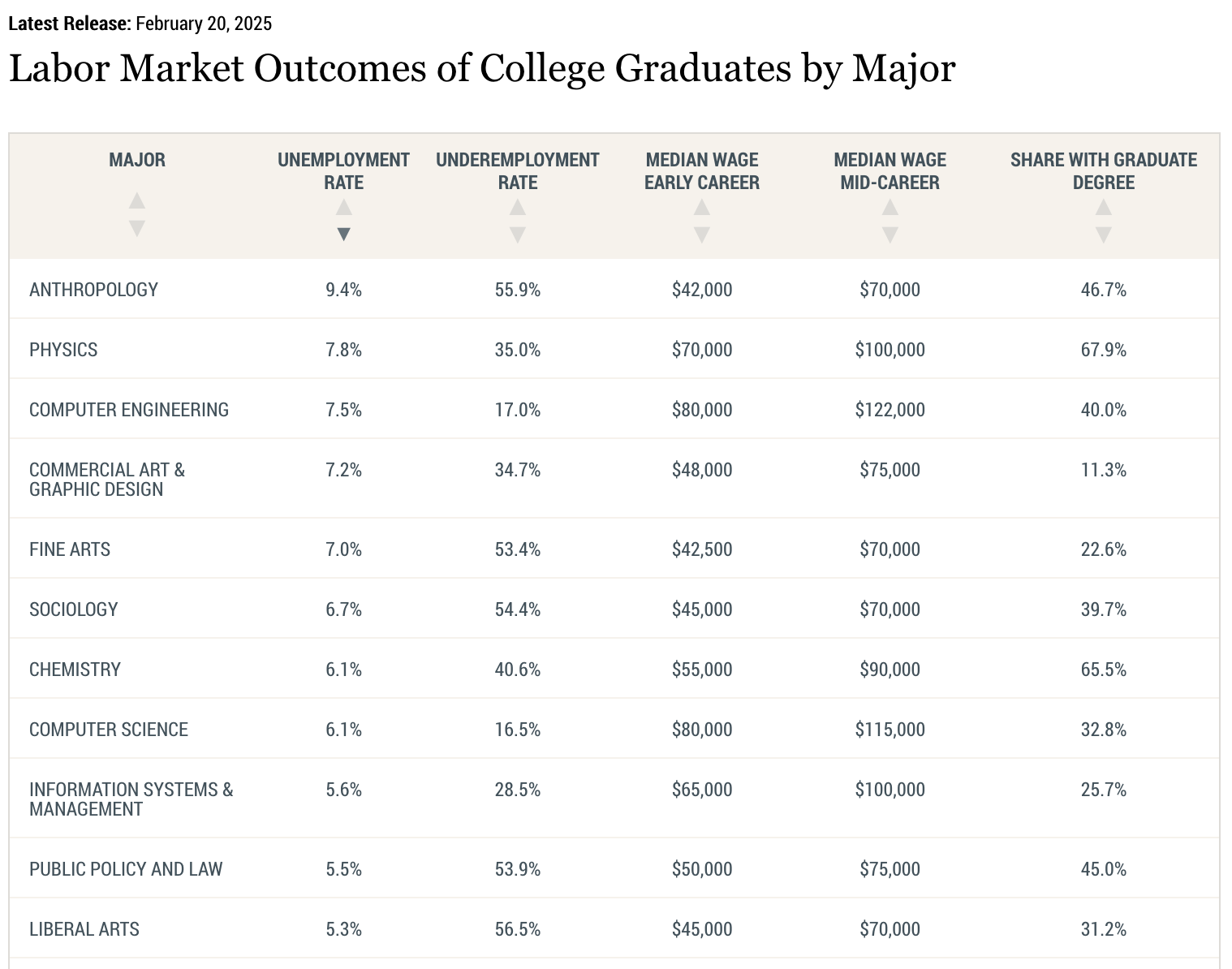
"learn to code and you will get a great high paying job" idea just got its obituary written in graduate unemployment statistics.
And the people who do have jobs are rapidly, not having them. With new announcements of layoffs weekly (another 9k went at Microsoft this week). Its rough out there.
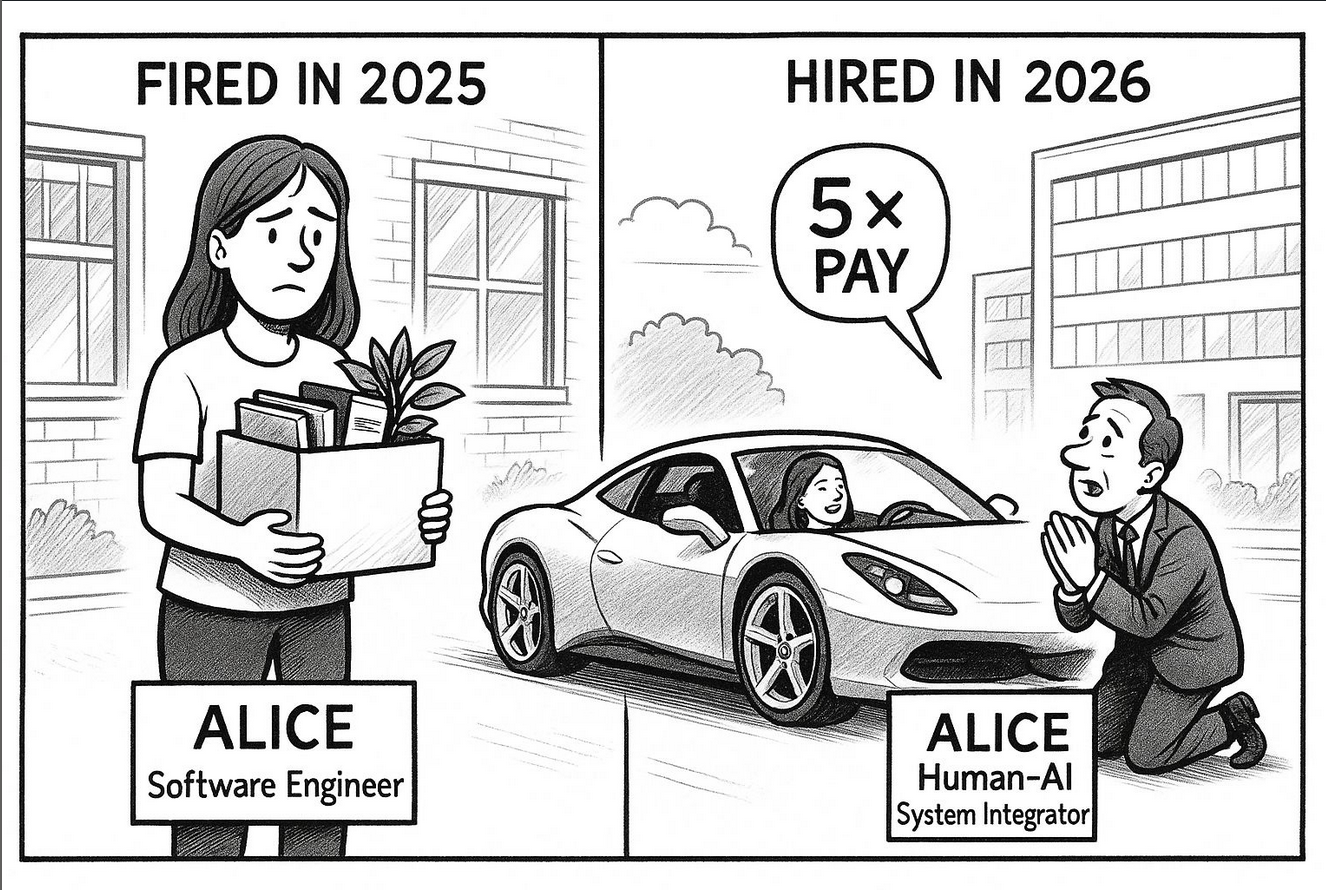
But not for everyone, Meta is throwing around millions to hire top tier talent. While not everyone can be a OpenAI level datascientist, my strong suspision is that engineers who are able to embrace the new way of working will become even more highly leveraged value for businesses, but sadly, we will need less of them.
I hope you like pizza
Amazon's famous two-pizza team rule assumed human limitations around communication and coordination. Meaning the ideal team size was one you could feed on 2 pizzas. 6-8 people, manageable communication overhead, predictable velocity.
But now, can one person can have two pizzas all for themself?
I could argue that one developer with some good AI (e.g. Claude Opus), can come close to matching an entire team from 2010/20-era's output. Not because you code faster, because you're not just coding, you're orchestrating an entire team, but with less communication overhead.
2020 Two-Pizza Team:          2025 You + AI:
- 6 people (eng, ux, pm)      - 1 Full Team Developer
- 240 hours/week              - 300+ AI hours/week
- 2-week cyles                - 2-day cycles
- Coordination: 30%           - Coordination: What meetings?
Perhaps a little hyperbloic, you may argue about the numbers, its not x5-6, but perhaps twice as fast, or even just 50% faster. Your millage may vary, but I've watched solo developers ship in days what used to take weeks, if not quarters. But velocity isn't the only change.
Communication and coordination of humans is hard, due to our limited bandwidth for communciation. As they say:
“If you want to go fast, go alone, if you want to go far, go together”
Neil D. Lawrence talks about the limitations of human bandwidth, when compared to AI in Atomic Human (a good read). AI's can consume and communicate information waaaaay faster than you and your team mates (its light speed vs walking speed).
So this is why documentation is more important than ever.

If you can document it, make a process for it (ideally in markdown format, or an MCP), AIs can consume it in (micro)seconds. That coordination overhead just dropped massively. And they can type a hell of a lot faster than you too.
Output ≠ Outcome (But You Own Both)
"One developer can now generate 10K lines of code daily!"
So what? A junior developer can copy-paste Stack Overflow all day too. Volume was never the biggest constraint.
The real shift: You now (more than ever before) you have the option (perhaps necesisty) to own much more of the product surface. AI can now help handle the HOW, you (as the developer) get to own so much more of the WHAT and WHY.
Hand offs to/from backend/frontend/product/ux are slow and coordination is hard. Every time you are waiting to be told what to build or why you are building it, you're falling behind.
Welcome to Full Team Engineering.
Your New Job Description
Marty Cagan's four product risks just became your daily checklist:
Value Risk: Will customers pay for it/value it?
Old you: "That's product's job"
New you: AI spins up prototypes, you validate with real users/experts.
Usability Risk: Can they use it?
Old you: "Design will figure it out"
New you: Generate UX variants, test & iterate same day.
Business Viability: Does it make money?
Old you: "Above my pay grade"
New you: AI can help project financials, map business cases, structure presentations.
Feasibility Risk: Can we build it?
Old you: 3-week investigation
New you: AI proves it works in 3 hours
You're not full-stack anymore. You're full-team.
The Coordination Paradox
So what happens when every developer becomes a team?
Traditional org structures assume specialization and handoffs. Building for flow (e.g. team topologies anoter great book) helps here, but when one developer is able to take on the entire flow of a team solo, what and how we communicate may need to change.
Consider:
10 traditional developers = 400 hours/week, high coordination cost
10 full-team engineers = 4,000 effective hours/week, ??? coordination
What will coordination look like going forward?
You still need your coworkers!
Your coworkers aren't obsolete, the good ones just got even more valuable to you and the business. The fellow developers are now your architecture advisor and sounding boards. The PM becomes your strategy sparring partner. Design becomes your taste council.
But the dynamic shifts, they are not doing things FOR you any more, or perhaps even WITH you, they are shifting into consultants and advisors.
You still need experts and second opionions. You just don't need them as implementers any more.
But, this only works if you stop thinking like a code monkey and start thinking like a founder/team lead.
Before you might have worked on a ticket in a story/epic with 2-4 other developers, now YOU can own the story/epic alone, or perhaps the entire app.
I would argue, that every day you spend as a traditional developer, your market value drops. The developers who thrive won't be the best coders (but being a the best coders will likely help), they'll be the ones who have also learned to think like leaders of AI implementation teams.
With the right mindset, there is still a lot of opportunity and fun to be had.
The excavator is here. Time to get on board.
Your move: Pick one feature you're building. Pause on fring up the IDE. Instead, write a product brief. Have the AI focus on implementation (with you as guide and mentor) while you spend more time with your users and fellow experts.
Welcome to Full Team Engineering.
Also, for those who want more. A great follow up read / compaion post: https://www.elenaverna.com/p/the-rise-of-the-ai-native-employee I agree 100% with thier hot take:
→ Company sizes will shrink.
→ Org charts will flatten.
→ The middle management layers without vertical expertise will vaporize.
→ The AI-native employee will become the new 10x team.